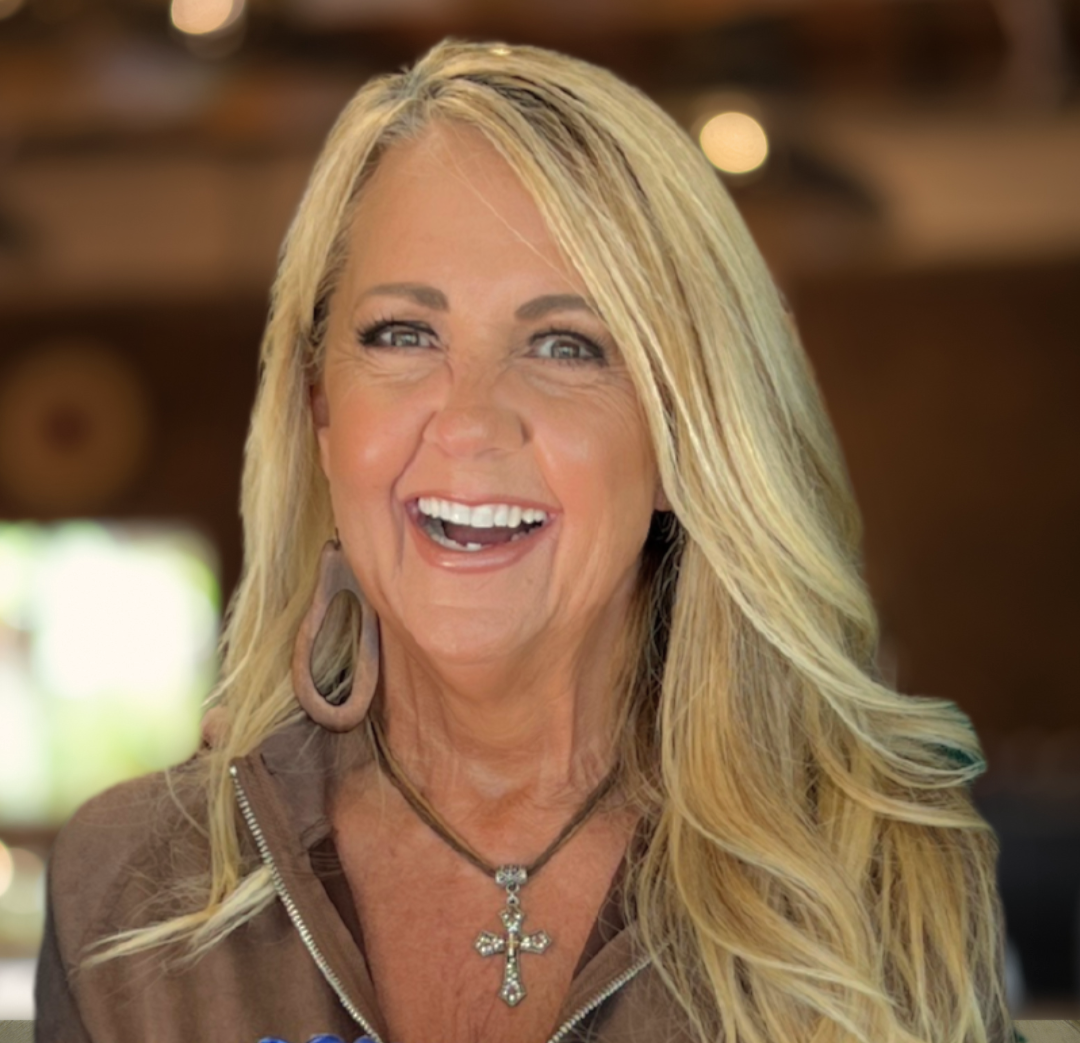
Gina Schreck had every reason to walk away. The lease wasn’t signed. Her husband wasn’t sleeping. The risk was enormous. She signed anyway. Here’s the decision framework that got her there and kept her going when COVID hit 10 days later.
Some decisions look reckless from the outside.
A 10-year lease. $217,000 down. A $500,000 build-out. A husband with heart palpitations telling you the night before not to do it. And, though she couldn’t have known it, 10 days until a global pandemic shut everything down.
From the outside, Gina Schreck’s decision to leave her marketing agency and open The Village Workspace in Denver looks either brilliant or crazy. Depending on the day you ask her, she’ll tell you it was a little of both.
But what I want to talk about is the framework she used to make that decision. Because it’s the same one she uses every time things get hard. And it’s the reason she never closed her doors during COVID, while other spaces around her went out of business.
The Night Before: What You Do When the People Closest to You Say Stop
Gina had spent months building toward this. She’d toured co-working spaces all over the city, sat down after each one to dissect what was missing, gathered a community of early believers, and put together a clear picture of exactly what she was going to build. She was confident. She was ready.
Then her husband Kirk sat her down the night before she was supposed to sign the lease and told her he was having heart palpitations over it. That at their stage of life, (she was 55, he’s six years older) he didn’t know if this was wise.
She went to bed thinking her ship had sailed.
She woke up more resolved than ever.
“I woke up the next morning with a greater sense of resolve. I said to him: I know this is going to work. And I’m going to do everything in my power to reduce the risk.” — Gina Schreck
The thing that gave her that resolve wasn’t blind confidence. It was the work she’d already done. Every event she’d hosted, every conversation with potential members, every hour spent researching the industry, that all stacked into a certainty that her husband, despite being a brilliant COO, didn’t have access to.
She also asked herself a clarifying question: if the tables were turned and Kirk felt this strongly about something, would she stop him? She knew the answer. She wouldn’t. And she didn’t think he actually would either, if he had the same knowledge she did.
The conversation she had with him the next morning wasn’t a fight. It was honest. She told him she valued his input and she knew her gut. She signed the lease.
Confidence Isn’t a Personality Trait. It’s a Collection.
This is probably the most transferable thing Gina said in our entire conversation, so I want to make sure it lands.
She’s been in business for 35 years across multiple companies. None of them had overhead like this one. None of them had the financial exposure this one did. So how do you walk into something that big?
Her answer: you don’t rely on courage in the moment. You rely on evidence you’ve already collected.
“Confidence is just those little shreds of experience that stack up. Every time you do something hard and succeed — collect that. Carry it with you. Because when you face the next decision, you can look at that collection and say: I’ve done hard things before.” — Gina Schreck
She wasn’t betting on the lease working out. She was betting on herself. And she had 35 years of data that said: if I show up every day and I’m willing to outwork everyone else, I can make it work.
That’s a different kind of confidence than optimism. It’s evidence-based. It’s earned.
The implication for every leader reading this: you need to start tracking your wins as deliberately as you track your failures. Not to feel good about yourself; to have data you can actually use when the next hard decision shows up.
10 Days After Opening: What She Did When Everything Shut Down
The Village Workspace opened March 2nd, 2020. On March 13th, Colorado started shutting down.
Gina was in Atlanta speaking at a conference when she saw staff spraying chairs with Lysol during a break and thought: what is happening?
Within weeks, she was watching a Facebook Live of a woman she’d never met closing her co-working space in Denver, a space with all open seating, no private offices, no way to keep people distanced. Gina sat in her own space and cried. She didn’t know if she was watching a preview of her own future.
Here’s the thing that saved her; it wasn’t luck.
The Village had been built with private offices. Thirty-four of them. People could come in, close their door, and be completely isolated while still getting out of their house. While other spaces were forced to shut down because they couldn’t maintain distancing, The Village became what Gina calls “a little sanctuary of normalcy.”
The model she’d built, based on what she personally needed in a workspace, turned out to be exactly what people needed during a pandemic.
But the private offices were the design choice. Her mindset was the thing that got her through the fear.
“The only thing I’ve learned to do with crippling fear is to keep taking action. If you just keep taking action through the fear, it brings you through the fear.” — Gina Schreck
She called a meeting with every member. They started doing daily Facebook Lives called Remote Life, each one hosted by a member sharing what they knew about working remotely. She stopped focusing on whether the business would survive and started focusing on how to help the people who were already there.
Action through fear. Not despite it. Through it.
The “Only I” Framework: How to Find Your Actual Differentiator
Gina spent years in marketing helping companies answer one question: what makes you actually different? Not what you say makes you different, what actually does.
Her answer to that question for her own business is what she calls the “Only I” statement.
Every business thinks it’s unique. Most aren’t. If you go look at 10 competitors, you’ll probably find the same words on all their websites. The exercise isn’t to describe what you do, it’s to identify what only you bring to how you do it.
For The Village Workspace:
- Only I came to co-working as a small business owner who’d actually needed the space herself.
- Only I built it as a female leader specifically because every existing space felt masculine and sterile.
- Only I built a community-first model, meeting one-on-one with every member to strategize on their business, because when they grow, they need more space.
That last one is worth pausing on. She’s not selling offices. She’s invested in the growth of every business inside her walls. That is a different business model, not just a different marketing message.
The question for any leader: what is it that only you bring, from your background, your experience, your perspective, your hard-earned failures, that competitors can’t replicate even if they copy your product?
That’s your real differentiator. Build from there.
Every Big Yes Creates a Dozen Necessary No’s
In 2021, a year into running The Village, Gina sold her marketing agency.
She’d built that business over years. She had 12 employees. She knew how to run it. It was working.
And she was neglecting it because she couldn’t stop thinking about the co-working space. She’d walk out of The Village at the end of a day not wanting to leave. The energy, the community, the entrepreneurs all figuring things out together, it was feeding her in a way the agency no longer did.
So she sold it. She’d been in talks with a buyer for a couple years. She called him. He was still interested. They worked it out.
The lesson isn’t that she abandoned something. The lesson is that she recognized when a yes requires you to fully commit and commitment means letting go of what it’s replacing.
This is where most founders stall. They try to hold both. They say yes to the new thing while slowly draining energy from the old one. Nothing gets full attention. Neither thrives.
Gina’s advice, born from her own experience selling both of her previous businesses: start every business with the intent to sell it. Not because you plan to but because it forces you to build something that doesn’t depend entirely on you. Systems, profitability focus, clean structure. A business worth owning. A business worth buying.
What I Want You to Take From This
When I asked Gina what she wanted listeners to walk away with, she didn’t hesitate.
“You can do hard things. People do hard things every single day that seem impossible. And what seems impossible today should just become an everyday thing.” — Gina Schreck
That’s it. That’s the whole framework, distilled.
Not that you should take massive financial risks. Not that you should ignore the people you love when they raise concerns. But that the things that feel impossible: the lease you’re afraid to sign, the pivot you keep delaying, the decision you wake up at 3am thinking about. Those are survivable. Other people are doing them right now. And every single one of them was scared.
What Gina did wasn’t bold because she wasn’t afraid. It was bold because she was afraid and she did it anyway. She collected her evidence, she trusted her knowledge, she committed fully, and she kept taking action when things got hard.
That’s the decision intelligence. The rest is execution.
About Gina Schreck
Gina Schreck is a nationally recognized speaker, marketing strategist, and founder of The Village Workspace in Denver, Colorado — a female-focused co-working space built around community, inspiration, and the idea that where you work shapes how you work. She’s been in business for 35 years across multiple companies.
Connect with Gina on LinkedIn at Gina Schreck or visit thevillageworkspace.com.
If you’re sitting on a decision that feels too big — and you’re not sure whether to push through or pull back — The Edge Forums is where operators and executives work through exactly this. Find out more.
Unstoppable is a decision intelligence podcast for leaders who refuse to settle. Hosted by Jana. New episodes weekly.