
The Bigger Risk Was Staying
Most people frame the leap into entrepreneurship as a risk calculation. What are the odds this works? What’s my runway? What do I do if it fails?
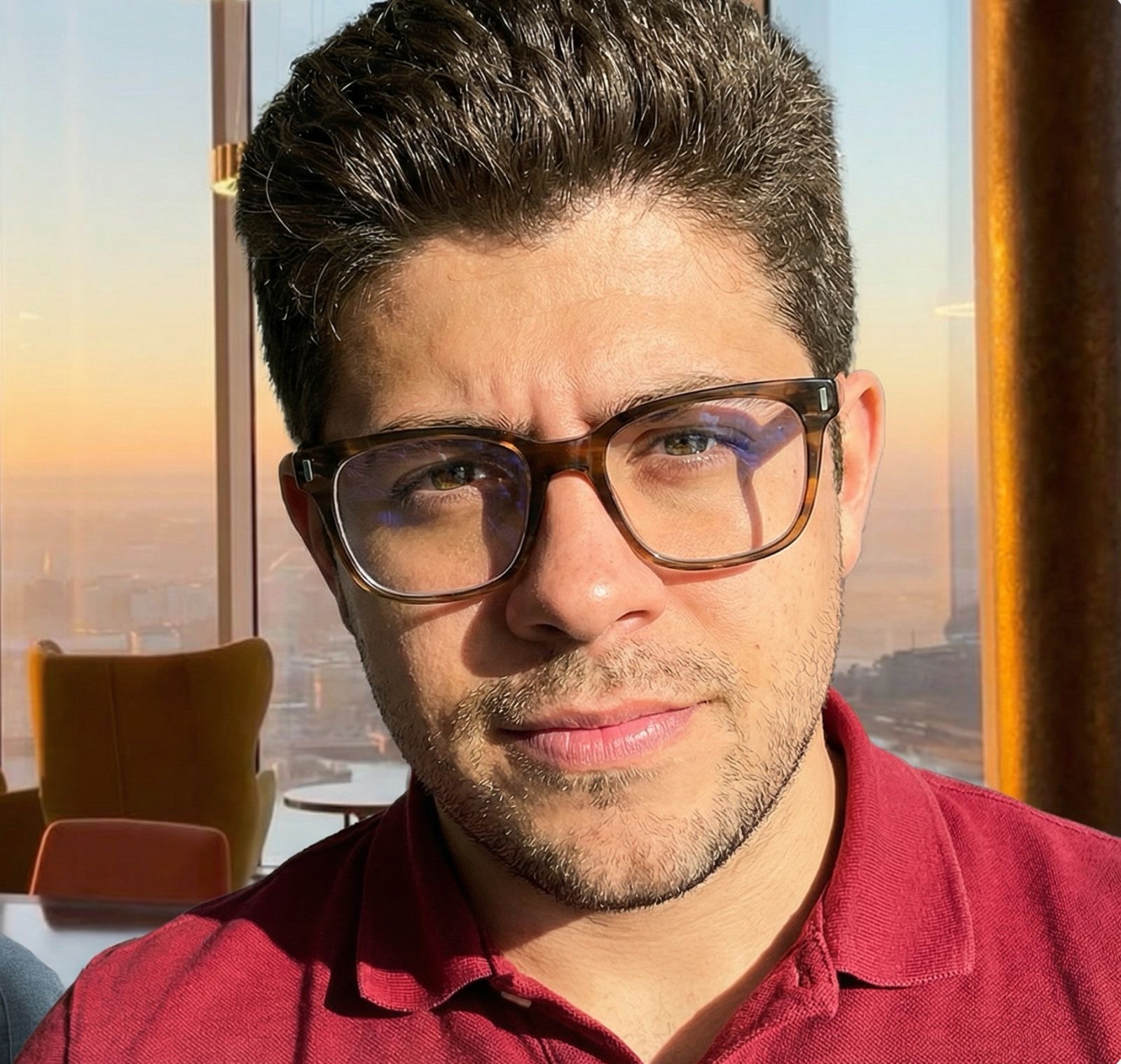
David Pourquery inverted that.
At 25, he was working at an $8 billion private equity fund in London. Strong comp. Good trajectory. The kind of job people spend years engineering a path into. By most external measures, he was winning.
He left anyway. No investors. No safety net. Barely an MVP. A one-way ticket to Vietnam, 18-hour days, and a product he described as “super trash” by current standards.
Within six months of launching full autonomy in January 2026, Groas, his AI platform for Google Ads, was growing faster than the team could keep up with. Organic growth. No paid acquisition. Seven figures in revenue. All bootstrapped.
The story gets told as a risk story. It isn’t one. At least not in the way most people think.
“The biggest risk,” David said, “is staying.”
He’s right. But only if you understand what he actually means by that.
The Two Decisions Most People Collapse Into One
There’s a pattern in how people think about leaving a stable career: they treat it as one decision. Should I go?
David made two separate decisions, at two separate moments, with two separate sets of criteria.
The first decision was whether to leave private equity at all. That one came one year into his role at the larger fund. He’d taken initiative on something, gone out on his own, done the work, brought something back that was objectively logical and that competitors were already doing. Instead of recognition, he got anger. Bureaucracy. Politics.
“I don’t have the brain for this,” he said, without much self-pity. “I am naturally someone who takes initiative, takes risk, takes action. And when you have five different layers of bureaucracy, I mentally will start to struggle.”
That was the first decision. It wasn’t about opportunity. It wasn’t about market timing. It was about self-knowledge: recognizing that the environment itself was incompatible with who he was. Not better or worse. Just incompatible. Staying would mean slowly grinding himself down trying to fit a shape he was never built for.
The second decision, when to leave, was tactical. And that’s where traction entered the calculation. Not revenue. Traction. Specifically: serious Google Ads spenders, people who did this professionally, were trusting their campaigns to an early MVP. People who knew the space telling him, quietly, “you’re onto something.”
“When I heard that from people I respected,” he said, “I was like, maybe we are.”
That was enough. Not a financial model. Not a comparable exit multiple. Signal from operators who knew what they were looking at.
Most founders collapse these two decisions into one and get stuck. They’re asking should I go when they’ve already answered it. They’ve known for a year, or three. The real question is just the timing. And timing requires something different: evidence of traction, not certainty of outcome.
Why He Never Raised Money and Why That Was the Point
David came out of both private equity and venture capital. He’d seen both worlds from the inside. He knew the mechanics, the dynamics, the power structures. That knowledge made him more certain, not less, that he didn’t want any of it.
“If you raise money, you are again working for investors. Whether you like it or not, you now have people to respond to.”
The goal was never a big exit. It was control: of time, of decisions, of who he worked with and how he worked. VC funding would have solved a cash problem while recreating the exact dependency structure he was trying to escape. A more comfortable cage is still a cage.
So Groas was built with constraints. He moved to Vietnam, cheap rent, zero social overhead, one contact already on the ground, and ran 18-hour days, seven days a week, for months. WhatsApp open to every customer at 2 a.m. Revenue going straight back into the product.
This is what bootstrapped actually looks like. Not a romantic side-hustle narrative. An 18-month blur of putting out fires, answering messages before the sun rises, and keeping costs low enough that the business can survive the time it takes to get the product right.
The constraint was also the signal. If Groas couldn’t be profitable without outside capital, it wasn’t a real business yet. He needed to figure out how to make money from day one and that discipline shaped what the company became.
The Outsider Advantage
Here’s what gets missed in this story: David had no marketing background. He’d never worked at an agency. He didn’t have friends in the industry. He came into the digital marketing space as a complete outsider.
That wasn’t a weakness. That was the edge.
“There’s a lot of stuff that a marketing agency would do, which I’m like — this doesn’t make logical sense. But they all do this. This is insane.”
When you grow up inside an industry, you absorb its assumptions. You learn what’s “done” and what “isn’t done.” You inherit the orthodoxies without ever testing whether they hold. The insider’s knowledge is real, but it’s also a filter. There are things you stop questioning because you’ve always seen them done that way.
David came in from the outside with deep technical ability (coding since 13, computer science degree, years of running Google Ads through his own e-commerce businesses) but without any of the industry’s received wisdom. He operated from first principles — what’s actually logical here? — and found that the answer was frequently different from what the industry was doing.
“I just operate from first principles. What’s logical to do?”
This is how you build something that displaces incumbents rather than competing with them on their own terms. You don’t try to do what they do, slightly better. You ask why they do what they do, and whether any of it actually makes sense.
He calls it domain expertise without industry expertise. He knew the technical and advertising mechanics cold. He just didn’t know the industry’s version of what was acceptable. That gap was where Groas was built.
The Pattern He’s Run Twice
What’s worth noting is that Groas wasn’t the first time David spotted an asymmetric gap and moved into it.
At 19, while studying at university in London, he started a cybersecurity course business. Not the theoretical encryption-and-principles courses that already existed. He was teaching teenagers how to actually do the things — break into wifi, understand how systems are exploited — in a practical, applied way. There was nothing like it.
“There was genuinely nothing on the market at that time,” he said. “I felt like I had taught myself so much. Why not impart that knowledge onto others?”
Same pattern. Sees something that isn’t being done. Has a personal edge: deep domain knowledge, technical skill, willingness to go where established players won’t. Moves.
At 19, the market was small, the margins modest, but the pattern was already there: find a white space, move fast, ignore the fact that nobody else is there (which is the point, not the problem).
By 25, he had the capital markets knowledge, the technical skills, the operational intuition from running his own e-commerce businesses, and the confidence from watching PE and VC fund managers up close and thinking, clearly, that they weren’t operating on some different level than him.
“I don’t think this person is more special than me. I don’t think they have something I don’t.”
That’s not arrogance, exactly. It’s calibration. The kind that comes from watching enough people at the top of competitive fields and recognizing that the gap between where you are and where they are is smaller than mythology suggests.
What Self-Knowledge Actually Buys You
The throughline in David’s story isn’t risk tolerance. It’s self-knowledge.
He knew he couldn’t operate in bureaucratic environments. He knew he needed autonomy over his time. He knew that a VC-funded startup would just recreate the dependency structure he was escaping. He knew he could live on very little if the work was his. And he knew, when he got that first validation from serious operators, that the signal was real.
None of those things are strategic insights. They’re personal facts about who he is and what environment allows him to function.
“I’ve always had a lot of confidence in myself that regardless of what occurred, I would figure it out.”
That’s not unfounded confidence. It’s confidence built on a pattern: he has, in fact, figured it out, multiple times, in multiple contexts, including ones where everyone around him was telling him not to try.
His parents thought the e-commerce hustle was foolish. His friends were skeptical about the PE exit. His former colleagues apparently still talk about it.
He did it anyway. And kept going. Because the alternative — staying somewhere his qualities would slowly be punished out of him — was, to him, the actual risk.
The Practical Calculus
David is careful to note that his calculus was specific to his circumstances. Single. Young. No dependents. Could live cheaply abroad. Could absorb total downside.
For someone with a family, a mortgage, obligations the equation looks different. “Maybe try to get to a certain point of revenue with your side business first. To the point where it’s almost replacing what you currently have.”
The principle isn’t jump immediately. The principle is assess accurately. Most people overweight the downside of leaving and underweight the cost of staying. The stagnation, the erosion, the slow accumulation of resentment that comes from being somewhere that doesn’t fit.
You don’t have to go to Vietnam on 18-hour days. But you do have to be honest about what staying is actually costing you: in trajectory, in capability, in who you’re becoming.
The risk calculation doesn’t change. The inputs do.
Stay unstoppable.
If you’re working through a pivotal decision of your own, The Edge Forums is where founders, executives, and operators sharpen the decisions most at risk of defining them. Apply or ask a question here.
Unstoppable is a decision intelligence podcast for leaders who refuse to settle. Hosted by Jana. New episodes weekly.
Key Takeaways
- Separate the two decisions. Whether to go is a self-knowledge question. When to go is a traction question. Collapsing them stalls people indefinitely.
- The outsider advantage is real. Domain expertise without industry expertise lets you see what insiders can’t; the orthodoxies they’ve stopped questioning.
- Bootstrapping is a values choice, not just a financial one. Taking VC recreates the dependency structure many founders are trying to escape.
- Self-knowledge precedes strategy. Knowing what environments allow you to function is more useful than any market analysis.
- Traction is a more honest signal than revenue. Early revenue is often priced wrong. Traction from operators who know what they’re doing is real validation.
- Assess the cost of staying. The risk of leaving is visible. The cost of staying — trajectory, capability, identity — is invisible but real.
About Our Guest
David Pourquery is the Founder and CEO of Groas, the company behind what it bills as the world’s first fully autonomous AI agent proven to outperform human Google Ads marketers. Before founding Groas, he spent several years as a private equity investor at HIG Capital, a Miami-based fund managing over $75 billion in assets, where he built a rigorous, data-driven approach to evaluating businesses and spotting operational inefficiencies. Alongside that, he built and scaled a portfolio of seven-figure e-commerce brands — experiencing the broken economics of ad spend firsthand. He left PE to build Groas fully bootstrapped, with no cofounder, no funding, and 100% founder ownership; the platform now manages more than $35M in monthly ad spend autonomously.
Connect with David: Website · LinkedIn
FAQ
How did David Pourquery start Groas? David Pourquery founded Groas while still working in private equity in London, initially building it as a SaaS recommendations tool for Google Ads campaigns in mid-2025. He left his PE role shortly after seeing early validation from high-spending Google Ads customers and relocated to Vietnam to work full-time on the business with minimal overhead.
Why did David Pourquery leave private equity? Pourquery left private equity primarily because of a mismatch between his personality — high initiative, risk-tolerance, action-orientation — and the bureaucratic structure of large funds. A specific incident where he took initiative and was penalized for it crystallized the decision. The timing of the exit was driven by early traction at Groas, not financial parity with his PE compensation.
What is Groas and what does it do? Groas (groas.ai) is an AI platform that runs fully autonomous Google Ads campaigns. Launched with full autonomy features in January 2026, it uses custom-trained AI models to make campaign management decisions that would otherwise require human operators, effectively replacing manual agency management. The company grew to seven figures in revenue organically within roughly six months of launching autonomy features.
Why did David Pourquery choose not to raise venture capital? Pourquery deliberately avoided VC funding despite multiple approaches from investors. Having worked in both private equity and venture capital, he understood that taking outside investment would recreate the investor-accountability structure he was escaping. His goal was complete control over time and decisions, which he viewed as incompatible with VC ownership stakes.
What is the outsider advantage in entrepreneurship? The outsider advantage refers to the competitive edge gained by entering an industry without inheriting its assumptions and orthodoxies. Pourquery credits his lack of marketing agency background as a key factor in Groas’s differentiation — he was able to apply first principles thinking to industry practices that insiders had stopped questioning, leading to product decisions that diverged significantly from established agency norms.
How do you identify asymmetric opportunity in a new market? According to Pourquery, spotting asymmetric opportunity requires two things: knowing yourself well enough to identify where your accumulated edge is genuine, and being willing to enter spaces where the absence of competition is a signal, not a warning sign. He identifies white spaces where no one else is operating and assesses whether he has a personal, specific advantage — technical, operational, or experiential — that justifies the entry.
When is the right time to leave a stable job to start a company? Pourquery suggests the timing decision is separate from the go/no-go decision. Once you’ve determined the environment isn’t right for you, the timing question becomes: when do you have enough traction signal — not revenue parity — to justify going all in? Early customers who are sophisticated operators endorsing a basic product is a more credible signal than early revenue from users who don’t know the space.